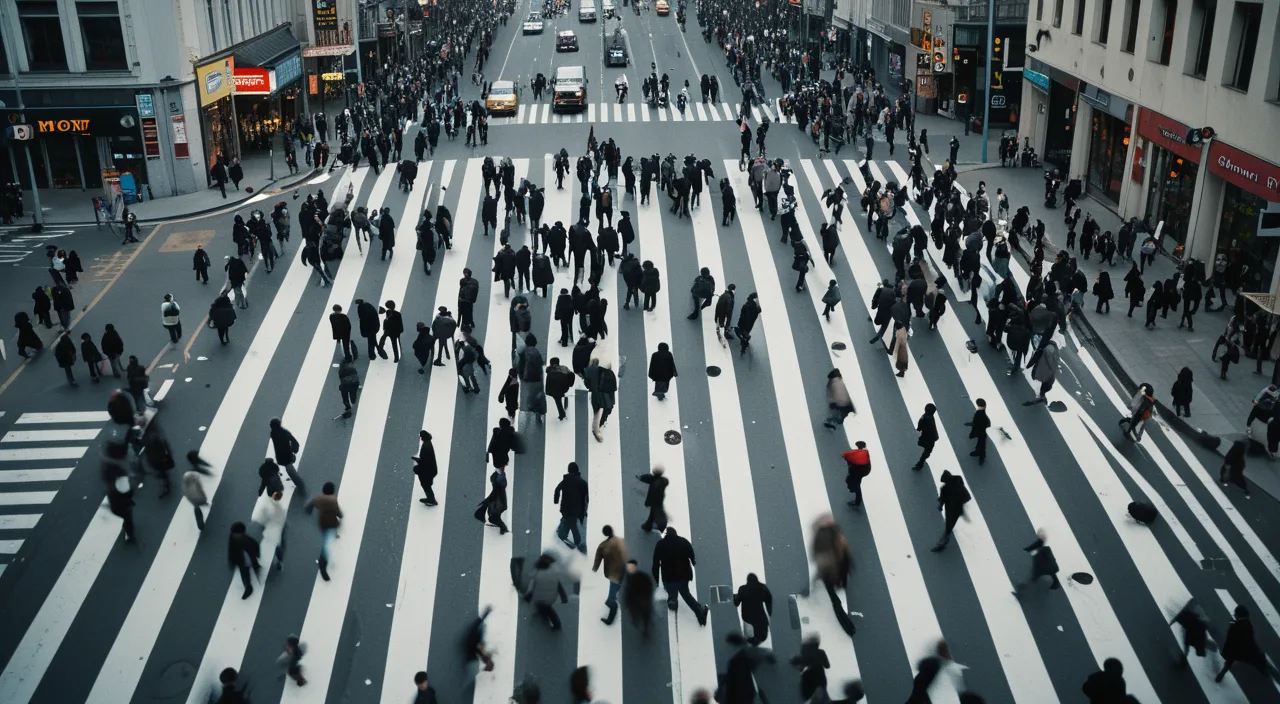
Demography is the slowest-moving of the seven domains, which is why it carries the highest confidence. Three numbers anchor 2050: about 9.7 billion people, a global peak in the mid-2080s near 10.3 billion, and roughly 2.1 billion people aged 60 or older. None of these is hype. All three are tracked by UN WPP and updated every few years.
What will the world population be in 2050?
About 9.7 billion under UN WPP 2024 (medium variant). The global population peaks near 10.3 billion in the mid-2080s and then declines. Previous revisions placed 2050 at 9.8 billion; the 2024 revision revised that down slightly.
| Claim | Source | Scenario | Confidence | On-track |
|---|---|---|---|---|
| World population in 2050 | UN WPP 2024 | medium variant | high | On |
| World population peak (~10.3 B) in the mid-2080s | UN WPP 2024 | medium variant | high | On |
| People aged 60+ in 2050 reach about 2.1 B (~26%) | UN WPP + WHO | medium variant | high | On |
| India already the most populous country (since Apr 2023) | UN DESA | observed | high | On |
| About 68% of the world urban by 2050 | UN WUP 2018 | baseline | medium | On |
India is already the most populous country
The most-watched 2050 prediction has already happened. In April 2023 UN DESA confirmed that India had overtaken China as the world\'s most populous country: 1.4286 billion to 1.4257 billion. UN WPP 2024 expects India to remain #1 through 2050 and beyond. China continues to shrink under almost every variant.
The peak is earlier than people expect
UN WPP 2024 places the global peak in the mid-2080s at about 10.3 billion. This is a meaningful change from earlier revisions, which placed the peak in the 2100s above 11 billion. The downward revision is driven by sharper-than-expected fertility declines in South Asia and Latin America. Demographers now treat "world population peaks before 2100" as the central forecast.
Aging is the dominant 2050 shift
The 60+ population doubles to about 2.1 billion by 2050, from 962 million in 2017. By 2050 roughly one in four people on the planet will be 60 or older. The implications for healthcare systems, pension finances, urban design and labour markets dwarf those of total population growth. WHO\'s Decade of Healthy Ageing initiative frames this as the most consequential population shift of the century.
Where the growth happens
Sub-Saharan Africa accounts for more than half of projected global population growth between now and 2050. Nigeria, the DRC, Ethiopia, Egypt and Tanzania have the largest absolute increases. East Asia (China, Japan, South Korea) shrinks meaningfully. Europe shrinks slowly. The Americas grow modestly through migration, more than natural increase.
Urbanization to about 68%
UN World Urbanization Prospects projects the urban share of the global population at about 68% by 2050, up from about 55% in 2018. Most of the increase comes from cities in Asia and Africa. Megacity counts continue rising; the urban-rural fertility gap continues compressing global fertility downward.
Frequently asked
What will the world population be in 2050?
About 9.7 billion under UN WPP 2024 (medium variant), with the world peaking near 10.3 billion in the mid-2080s and then declining. Earlier revisions placed the 2050 figure at 9.8 billion; the 2024 revision lowered it slightly.
Which country will have the largest population in 2050?
India, which already overtook China in April 2023 (1.4286 B vs 1.4257 B per UN DESA). India is projected to remain the largest country through and beyond 2050, while China continues to shrink.
When will the world population peak?
UN WPP 2024 projects the global peak in the mid-2080s at about 10.3 billion, followed by decline. This is earlier and lower than the 2017 revision implied.
How many people will be 60+ by 2050?
About 2.1 billion, more than double the 962 million in 2017, equivalent to roughly 26% of the world's population. WHO calls this "the silver demography": one of the most consequential population shifts of the century.
Which countries will see the largest population growth?
Sub-Saharan Africa accounts for more than half of projected global growth between now and 2050. Nigeria, Democratic Republic of the Congo, Ethiopia, Egypt and Tanzania see the largest absolute increases.
How urban will the world be in 2050?
UN WUP's latest projection has the urban share of global population at about 68% in 2050, up from about 55% in 2018. Most of the increase comes from cities in Asia and Africa.
Are predictions of 15 billion people by 2100 credible?
No. UN WPP 2024 projects peak at about 10.3 billion in the mid-2080s and decline thereafter. Claims of 15 billion are not supported by any major demographic forecasting body.
Continue to Longevity in 2050 → · Filter the Population timeline →